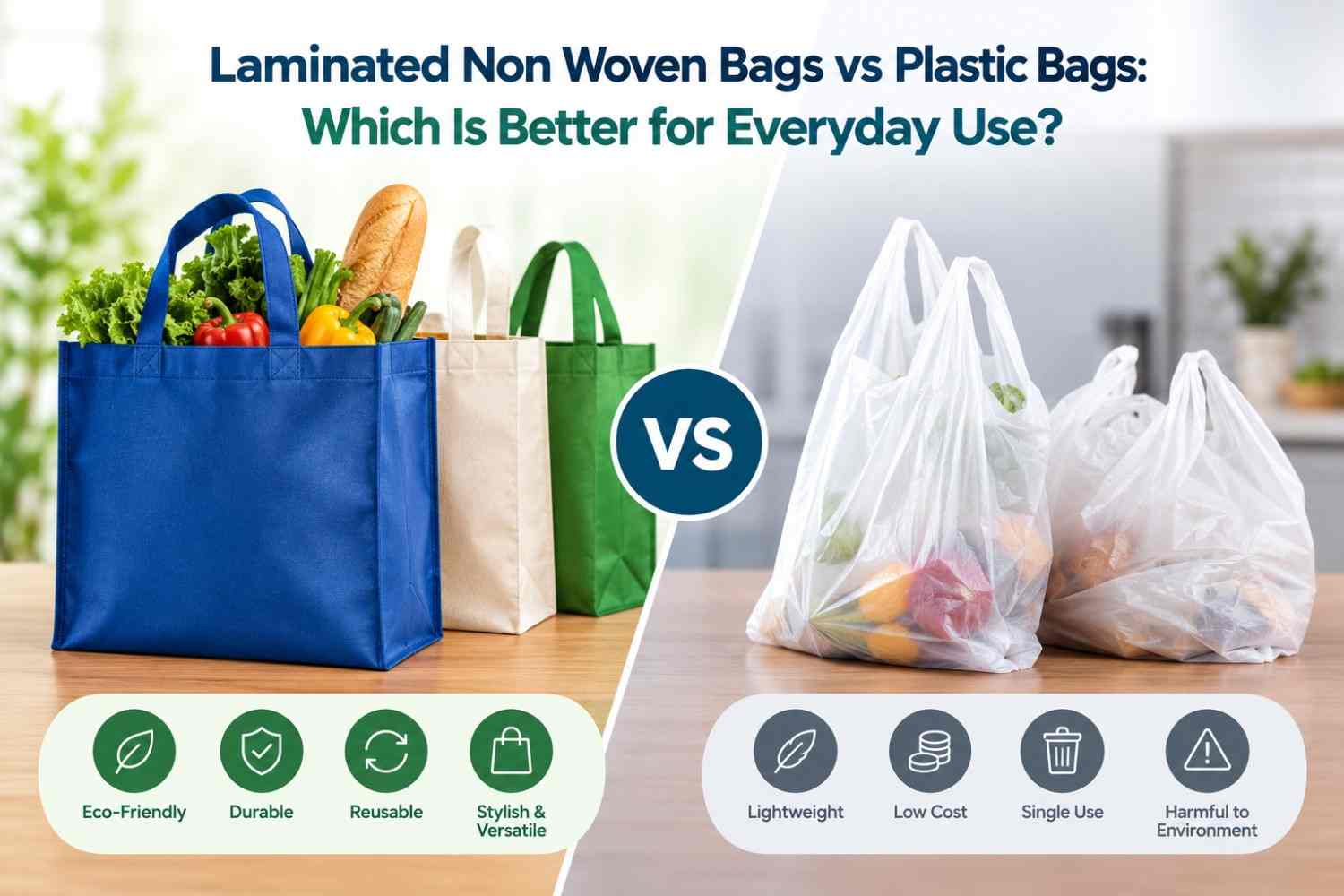
Laminated Non Woven Bags vs Plastic Bags: Which Is Better for Everyday Use?
Choosing the right shopping bag involves more than convenience. Durability, cost, reusability, and environmental impact all influence which option suits everyday needs. The comparison of Laminated Non Woven Bags vs Plastic Bags is important for shoppers, retailers, and businesses seeking practical packaging solutions. While plastic bags are lightweight and convenient, laminated non woven bags offer a sturdy structure, attractive printing options, and the potential for repeated use. Understanding their differences helps buyers make informed decisions.
Laminated Non Woven Bags vs Plastic Bags: Key Differences
Laminated non woven bags are generally made from polypropylene fabric with an additional laminated layer. This provides a smooth surface, improves moisture resistance, and supports high-quality printing. They are commonly used for shopping, retail packaging, promotional events, and carrying everyday essentials.
Plastic bags are typically made from thin plastic film and are suitable for lightweight products and short-term packaging. However, thinner varieties may tear when overloaded. When comparing Laminated Non Woven Bags vs Plastic Bags, consider the intended use, expected load, and frequency of reuse rather than appearance alone.
1. Durability and Carrying Capacity
When it comes to transporting groceries, clothing, and other items while shopping, durability is important. The laminated non woven bags may be more structurally sound and reinforced with their handles, depending on the design and how they are made. The above features make them ideal for normal shopping and for transport of various products.
Plastic bags are suitable for lightweight items, but are prone to stretching or tearing if they are too thin. The thickness of the plastic bags can also affect their performance, with thicker bags providing more strength (depending on the material quality and construction).
For everyday use, choose a bag with suitable dimensions, reliable handles, and sufficient load capacity. Comparing these features helps determine which option offers better practical value.
2. Reusability and Everyday Convenience
Reusable bags for everyday shopping can reduce the need to take a new bag for every purchase. Laminated non woven bags are popular for grocery shopping, clothing stores, gift packaging, and household errands because they can be used repeatedly when properly maintained.
Their structured shape makes packing convenient, and many designs can be folded for storage. Plastic bags may also be reused, particularly thicker varieties, but lightweight versions might not withstand frequent handling.
Regardless of the material, avoid overloading bags and keep reusable options clean and dry between uses. Consistent reuse can improve convenience and reduce unnecessary bag consumption.
3. Cost and Long-Term Value
Plastic bags can be low cost and are ideal for companies that need simple packaging materials in high volumes. The complex construction of fabric, lamination, printing and handle design of laminated non woven bags could be the reason why laminated non woven bags are somewhat expensive at first.
They can be a practical investment for retailers and customers; however, if they are used repeatedly. When creating a helpful Laminated Non Woven Bags vs Plastic Bags Comparison, it is essential to take into account the purchase cost, the length of time the bag is expected to last, how often or how seldom the bags will need to be replaced, and the purpose for which they will be used.
Another factor to consider is the minimum order quantity. If a business is ordering in bulk, it's important to compare the m.o.q. and customization charges. There will also be material specifications to consider before a business selects a packaging option.
4. Environmental Impact and Sustainability
The environmental impact of non-woven bags and plastic bags is related to manufacture, transportation, reuse, collection, and disposal. Reusability or lightness is not a given for the environment.
Non-woven lamination bags could play an important role in reducing the use of single-use bags in case consumers make efforts to reuse them continually. However, the problem is that such bags are usually manufactured using polypropylene, and they have laminate structure.
Pollution resulting from improper disposal of plastic bags is yet another reason for the pollution of these items. The effects that result from the use of plastic bags depend entirely on the kind of material used. To make the right alternatives to the use of plastic bags, one has to consider the entire product lifecycle.
Businesses can encourage responsible use by promoting reuse and checking local recycling options.
5. Branding and Retail Packaging Benefits
Packaging can have an effect on the customer's perception of a business. The smooth surface of the laminated non woven bags is ideal for logos, promotional messages, and colourful designs. They can be used in apparel stores, supermarkets, exhibitions, corporate events and promotions.
The bags can be customized according to the brand’s specifications in terms of size, color, handles, and print. When these bags are reused by consumers, the print will continue to promote the brand.
Working with an experienced Laminated Non Woven Bag Manufacturer in India helps businesses explore suitable materials, printing options, and production specifications. A dependable Packaging Bags Supplier can also help identify appropriate packaging solutions for different products and order volumes.
How to Choose the Right Shopping Bags for Daily Use
Before purchasing, consider these important factors:
Purpose: Choose according to whether the bags will carry groceries, clothing, retail products, or promotional materials.
Strength: Check material quality, handle construction, and load capacity.
Budget: Compare upfront costs with expected reuse and replacement frequency.
Maintenance: Select bags that are easy to clean and store.
Sustainability: Consider material composition, reuse potential, and available recycling facilities.
Plastic bags may suit certain lightweight, short-term applications, while laminated non woven bags can be more practical for repeated shopping and retail packaging.
Final Thoughts
Laminated non-woven bags vs. Plastic Bags is based on various factors like durability, convenience, cost, as well as being environmentally friendly. Despite the fact that plastic bags can be used for some light jobs, laminated non woven bags have high durability and can be used for any job.
The company AVS Packaging Pvt. Ltd. assists in finding suitable bags for businesses according to the requirements of business operations. The comparison between qualities, specifications, and the purpose of packaging is helpful in deciding on useful bags.